

Sovereign Emissions Pathway & Net-Zero Trajectory Framework
Operational climate trajectory framework for assessing country decarbonization performance through standardized emissions pathways and net-zero trajectory modelling.
Context
Sovereign fixed-income investors face growing pressure to integrate forward-looking climate considerations into portfolio construction, reporting and net-zero alignment processes. Regulatory initiatives, voluntary climate frameworks and institutional decarbonization commitments increasingly require investors to assess not only current sovereign emissions, but also the credibility and trajectory of future decarbonization pathways.
At the same time, sovereign climate assessments remain fragmented across inconsistent datasets, static emissions indicators and non-comparable target definitions. Institutional investors therefore require standardized implementation infrastructure capable of translating climate science, sovereign targets and historical emissions developments into operational portfolio metrics and comparable transition pathways.
The framework addresses this gap by combining IPCC-aligned carbon budget logic, sovereign emissions trajectories and implementation-oriented performance indicators into a unified sovereign climate assessment architecture.
Implementation challenge
Most sovereign climate datasets focus primarily on historical emissions levels or isolated target announcements without translating them into operationally comparable implementation metrics.
Institutional investors therefore face several implementation challenges:
- inconsistent sovereign emissions methodologies in the market
- limited coverage of emerging and frontier debt issuers
- absence of temperature-consistent sovereign decarbonization pathways
- lack of standardized fair-share allocation logic
- fragmented integration between emissions data, budgets and trajectories
These limitations create governance friction across investment, risk and sustainability teams and complicate sovereign net-zero implementation at portfolio level.
Framework architecture
The framework combines historical emissions data, sovereign climate targets and IPCC-derived carbon budget logic into a multi-layer sovereign transition architecture.
Core framework components include:
- Historical Emissions Layer
- Carbon Budget Layer
- CDC Fair-Share Allocation Layer
- Sovereign Target Standardization Layer
- Trajectory Assessment Layer
- Analytical Output Layer
The framework architecture is designed to support direct integration into sovereign investment processes and benchmark construction workflows.
Implementation workflow
The framework operationalizes sovereign climate analysis through a sequence of standardized implementation workflows.
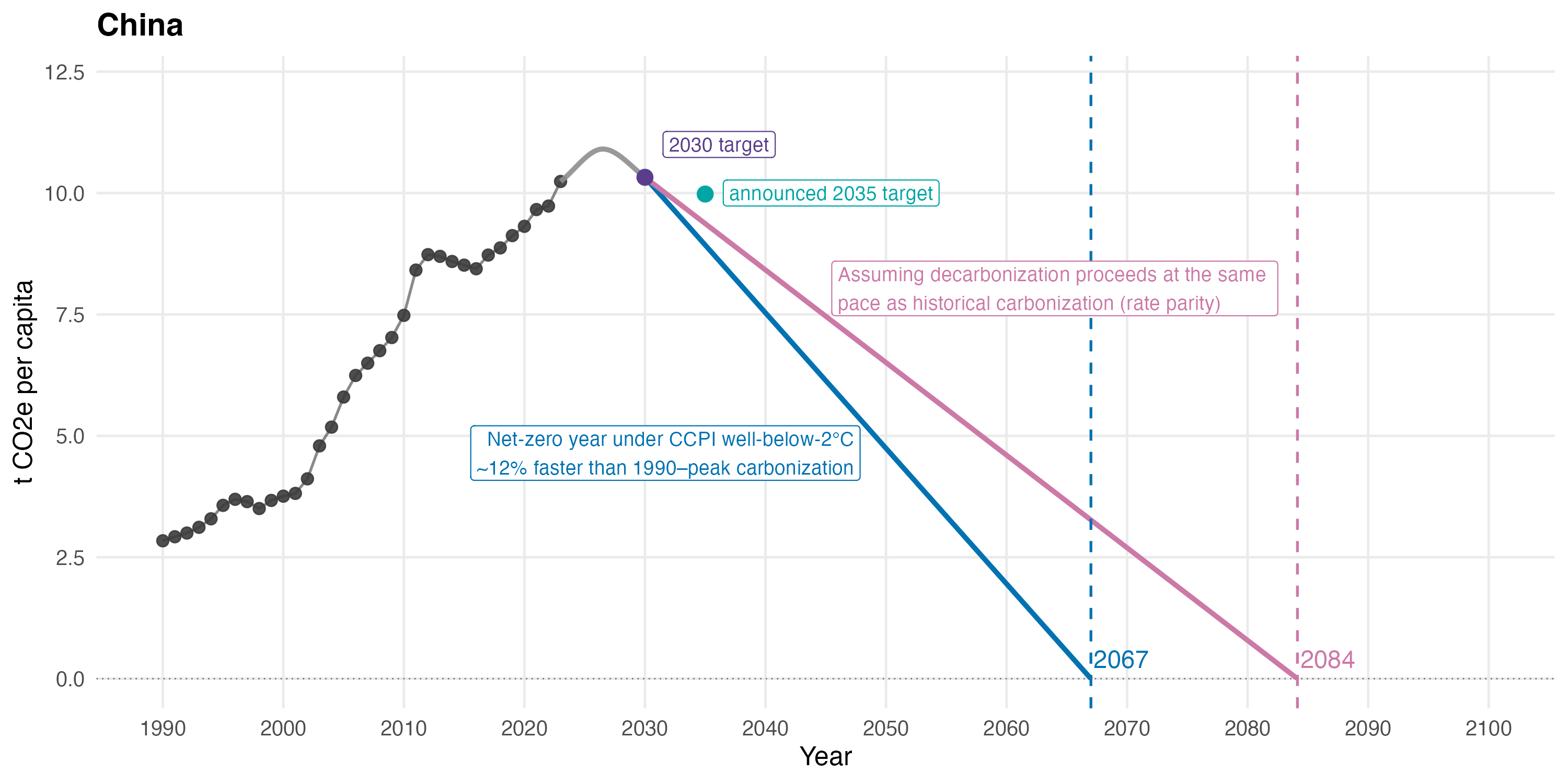
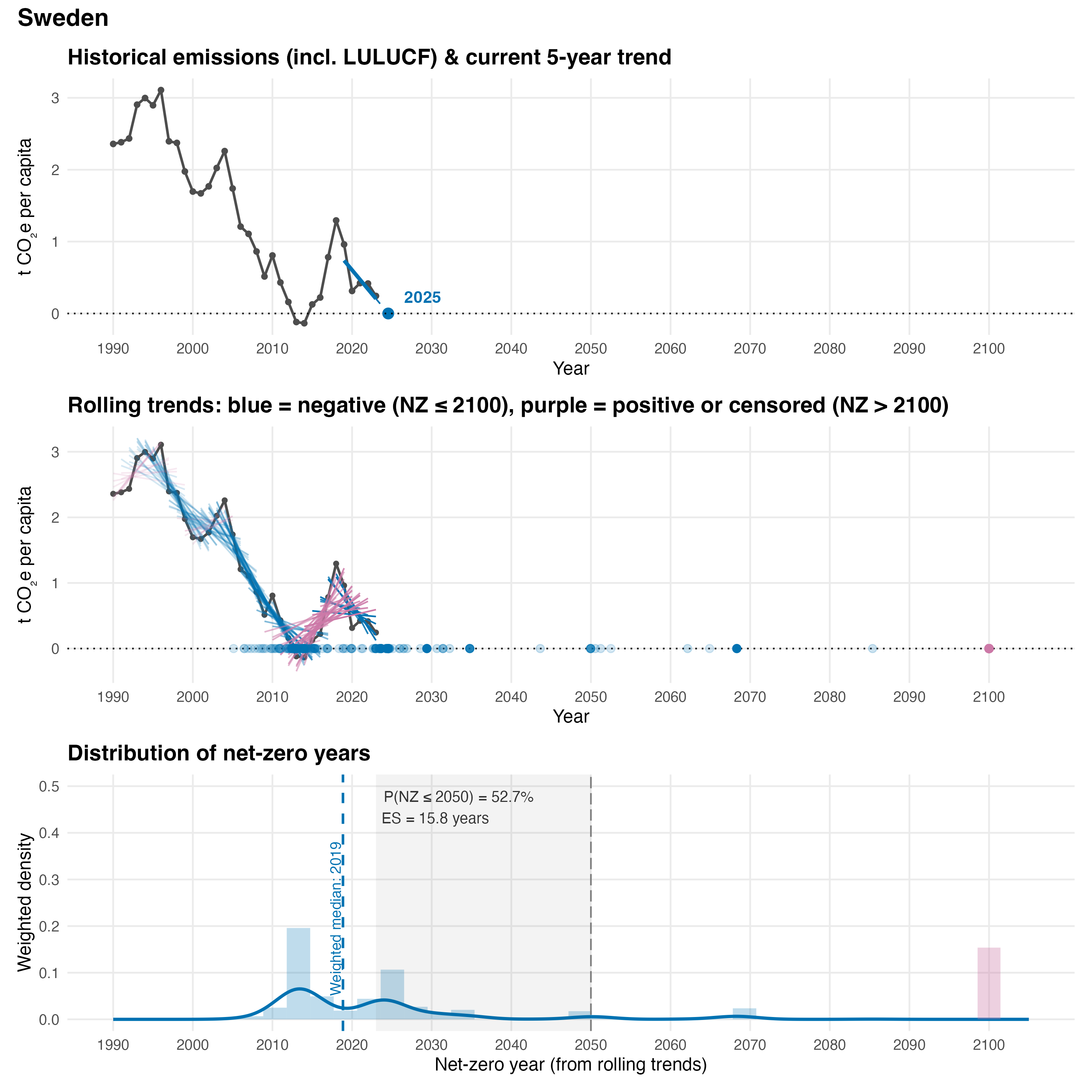
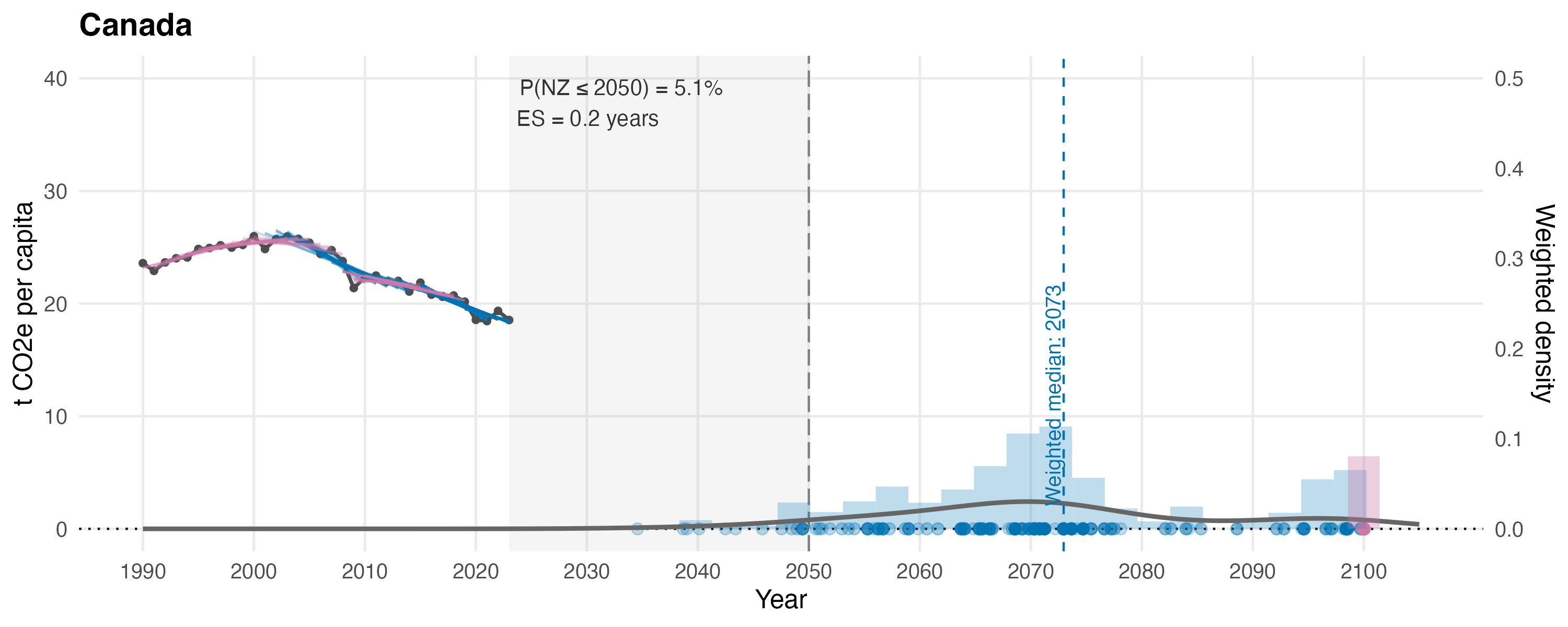
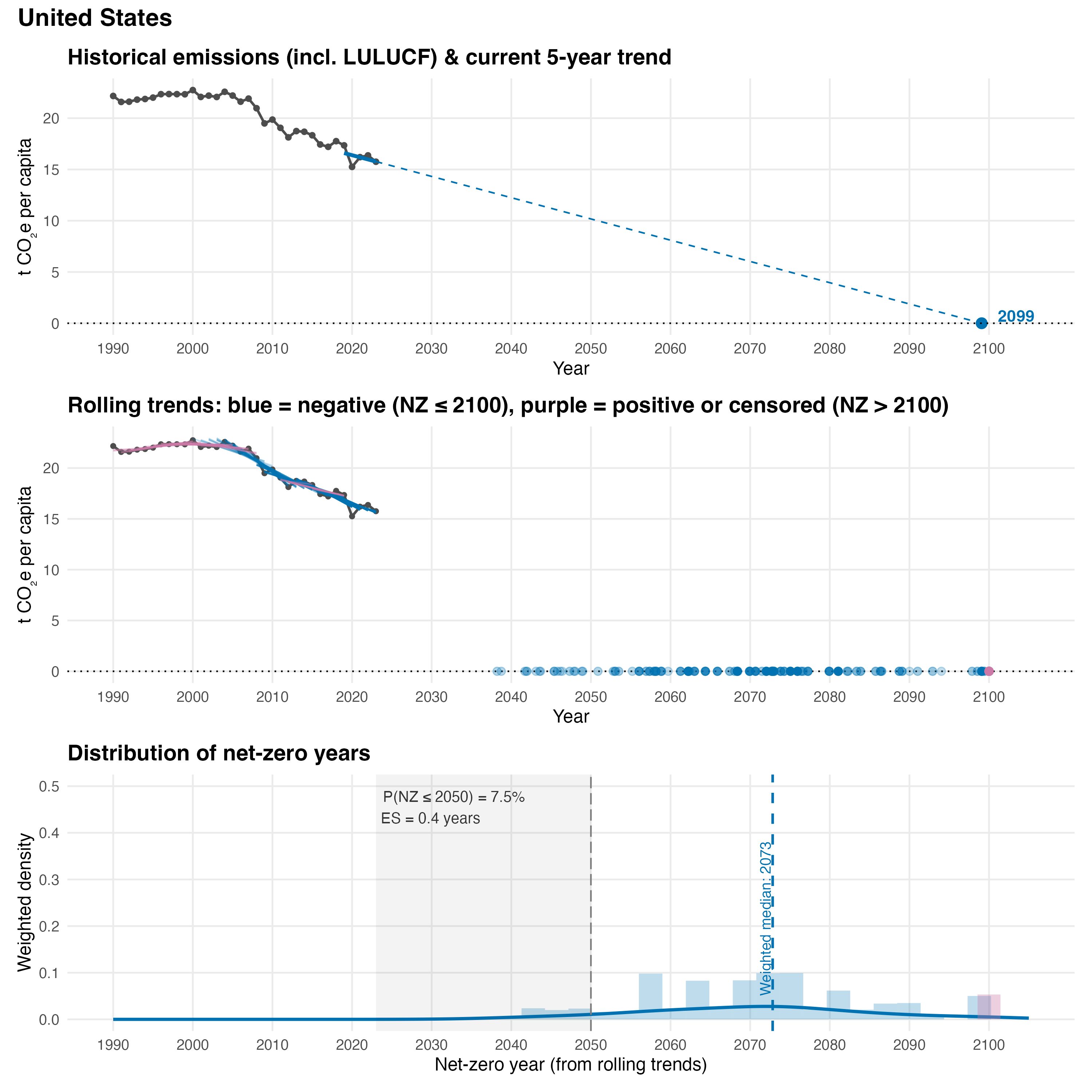
Historical emissions developments are translated into rolling decarbonization trend assessments using weighted multi-period windows. National targets are standardized into comparable residual emissions trajectories, while sovereign carbon budgets are converted into budget-compatible pathway constraints.
The resulting implementation logic enables investors to:
- compare transition pathways across countries
- estimate implied net-zero timing distributions
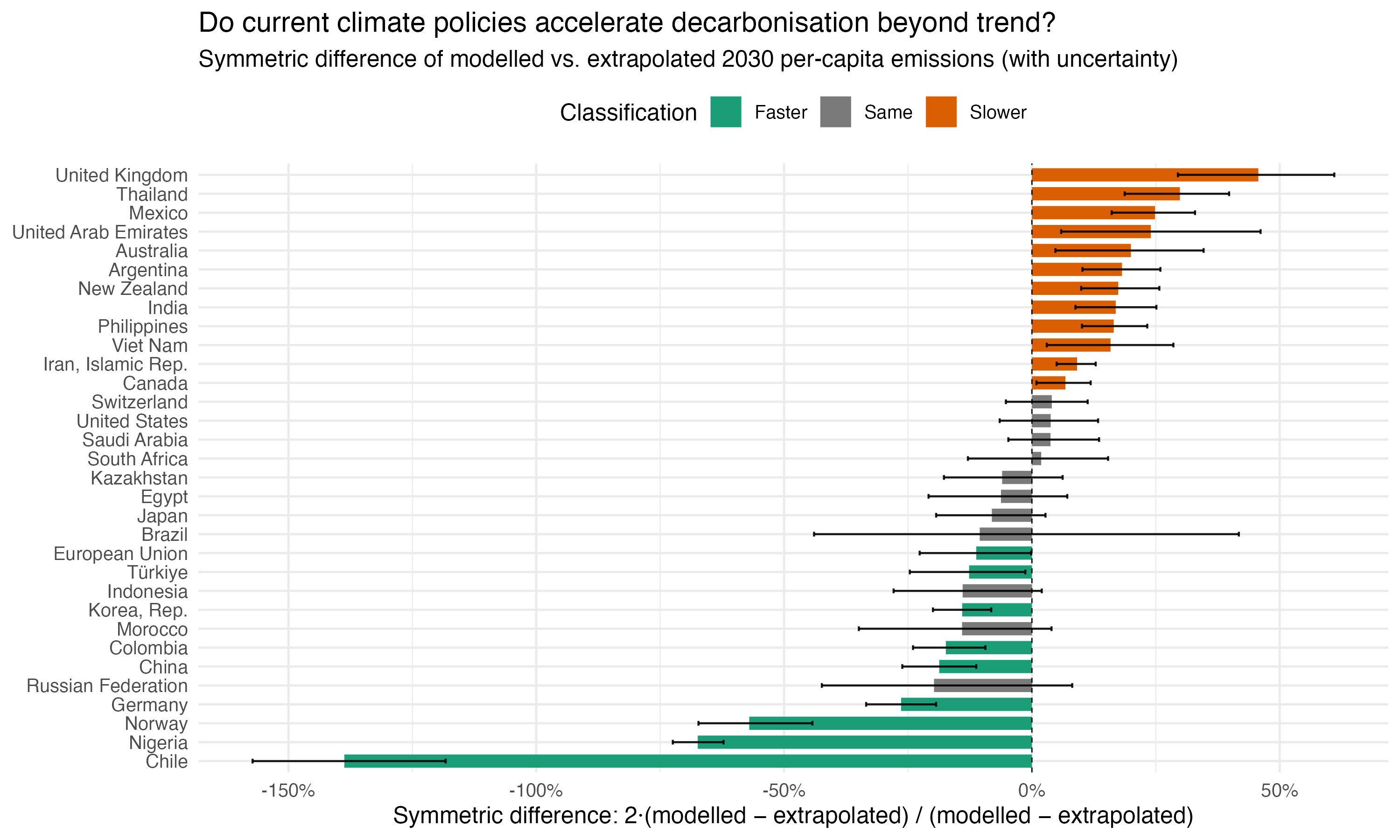
- identify divergence between policy ambition and historical performance
- evaluate budget compatibility at sovereign level
- assess decarbonization acceleration or slowdown dynamics
- integrate forward-looking transition metrics into allocation
The methodology is structured to remain operationally interpretable for investment teams while preserving scientific consistency with IPCC carbon budget logic and CDC fair-share principles.
Use cases
The framework supports portfolio implementation use cases including:
- Net-zero sovereign portfolio alignment
- Transition-risk assessment for sovereign debt
- Climate trajectory monitoring
- Transition-risk overlays
- Climate reporting integration
Implementation example
The framework has been structured for operational integration into sovereign climate analytics and portfolio implementation workflows.
Advisory integration
RCLM supports institutions in adapting and operationalizing sovereign emission pathway methodologies across investment and reporting workflows. Implementation areas include:
- Sovereign debt allocation review
- Net-zero target monitoring
- Forward-looking climate reporting support
- Carbon budget compatibility analysis
From framework architecture to implementation
The Sovereign Emissions Pathway & Net-Zero Trajectory Framework is part of RCLM’s broader implementation advisory approach focused on helping sovereign fixed-income teams operationalize climate-related sovereign investment processes.
Resource Snapshot
Operational characteristics of this implementation resource.


